
Hot News
How The Crown and Its Clothes Transform Power
Nov
How The Crown and Its Clothes Transform Power
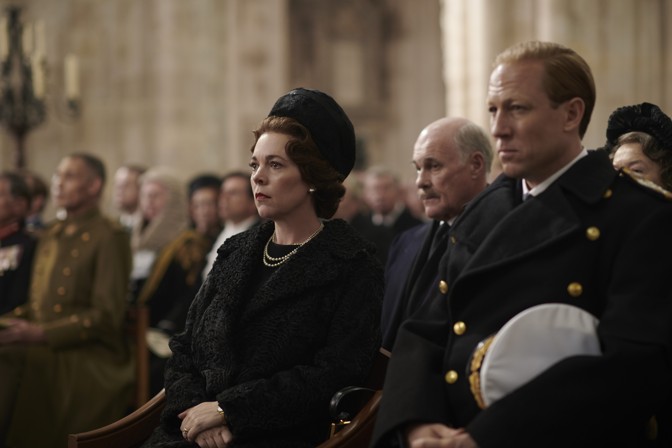
One of the most telling scenes in the new season of Netflix’s The Crown comes midway through the first episode, when Queen Elizabeth (now played by Olivia Colman) is preparing for a funeral. As the various units of Britain’s armed forces line up in formation by Buckingham Palace, the queen’s dresser readies the sovereign, clasping her signature three-strand pearl necklace, placing a black pillbox hat reverently on her head, and brushing any unconstitutional specks of dust off the shoulders of her wool coat. Outside, men in uniforms fire ceremonial cannons and pull a flag-covered coffin through silent streets. Inside, a woman puts on her own armor.In its first two seasons, The Crown felt like a study of a woman abruptly given power she’d never had reason to expect, or to prepare for. The younger Elizabeth II was played by Claire Foy, an actor who nimbly portrayed her character’s endearing girlishness in early episodes, her disorientation at having greatness thrust upon her, and her growing competence and composure as head of state and sovereign of the realm. I wrote in 2017 that The Crown often felt like a superhero story, its central character trying to come to terms with the widening chasm between her desires as a person and her role as a monarch. And, like any superhero, the Queen relies heavily on costume to delineate her dual identities.

The Crown’s costume designer, Jane Petrie, uses clothing to offer glimpses of insight into a character who, in Season 3, is becoming more and more unknowable. The first episode opens on the Queen sitting by a window, but it takes two and a half minutes before the camera gives a clear shot of her face. Instead, we see the symbols that have come to stand for her: a crown atop a head of regimented curls, the gates of Buckingham Palace flanked by two Welsh Guards, a pair of corgis striding across an ornately carpeted room. When Colman’s Queen finally comes into focus, she’s surrounded by a phalanx of men in dark suits. She, by contrast, wears a lilac dress with a love-knot detail over her breastbone, high-heeled black shoes, and pale stockings with seams running down toward her heels. Her authority is such that the men around her bend slightly backward when she enters the room, as if to surrender even the airspace to the head of state.
In reality, as in the show, the Queen’s deployment of pastel colors and pearls isn’t just a matter of personal taste. Since her coronation in 1953, when the Queen requested that her gown for the event be embroidered with symbols from countries in the British Commonwealth—English roses, Canadian maple leaves, Scottish thistle—every outfit she’s worn has been worn with intention. Clothing, for the Queen, is much more about diplomacy and visibility than style. In her recent book, Our Rainbow Queen: A Tribute to Queen Elizabeth II and Her Colorful Wardrobe, the writer Sali Hughes investigates some of the subtext of the Queen’s wardrobe, revealing that the monarch never matches her color palette to any country’s flag, to avoid accusations of partiality. And her penchant for bright colors, Hughes argues, isn’t about the monarch’s own preference; it’s to ensure that the people who have waited several hours will be better able to see her.

What The Crown suggests, though, is that the Queen also uses the clothes she wears to underscore her own authority. Season 3 is set in the 1960s and ’70s, capturing the period between the Queen’s 40th birthday and her silver jubilee in 1977—when she was no longer a young woman but was still habitually the only woman in most official situations. Like Foy’s character before her, Colman’s Queen wears comfier clothes when she’s off duty or at leisure: printed blouses, cashmere sweaters, Hèrmes scarves knotted over her shoulders. When she goes to the races, in her function as a breeder of horses, she cheerfully wears garish floral prints and hats covered in tiny petals. But in meetings with the prime minister, or when she’s obliged to dress down someone who’s stepped out of line, the Queen wears plain linen suits in darker colors. The outfit she wears to scold the statesman Louis Mountbatten (Charles Dance) recalls the military-green suit Claire Foy wore in Season 2 to deride the four prime ministers she’s outlasted as “a confederacy of elected quitters.” (Foy’s outfit was accessorized with a pillbox hat, a diamond brooch, and a defiant—even disdainful—tilt to the chin.)
